

Audubon / Downriver
A walkable Northwest Spokane neighborhood of early-1900s craftsman and bungalow homes, anchored by Audubon Park and Downriver Golf, five minutes from downtown.
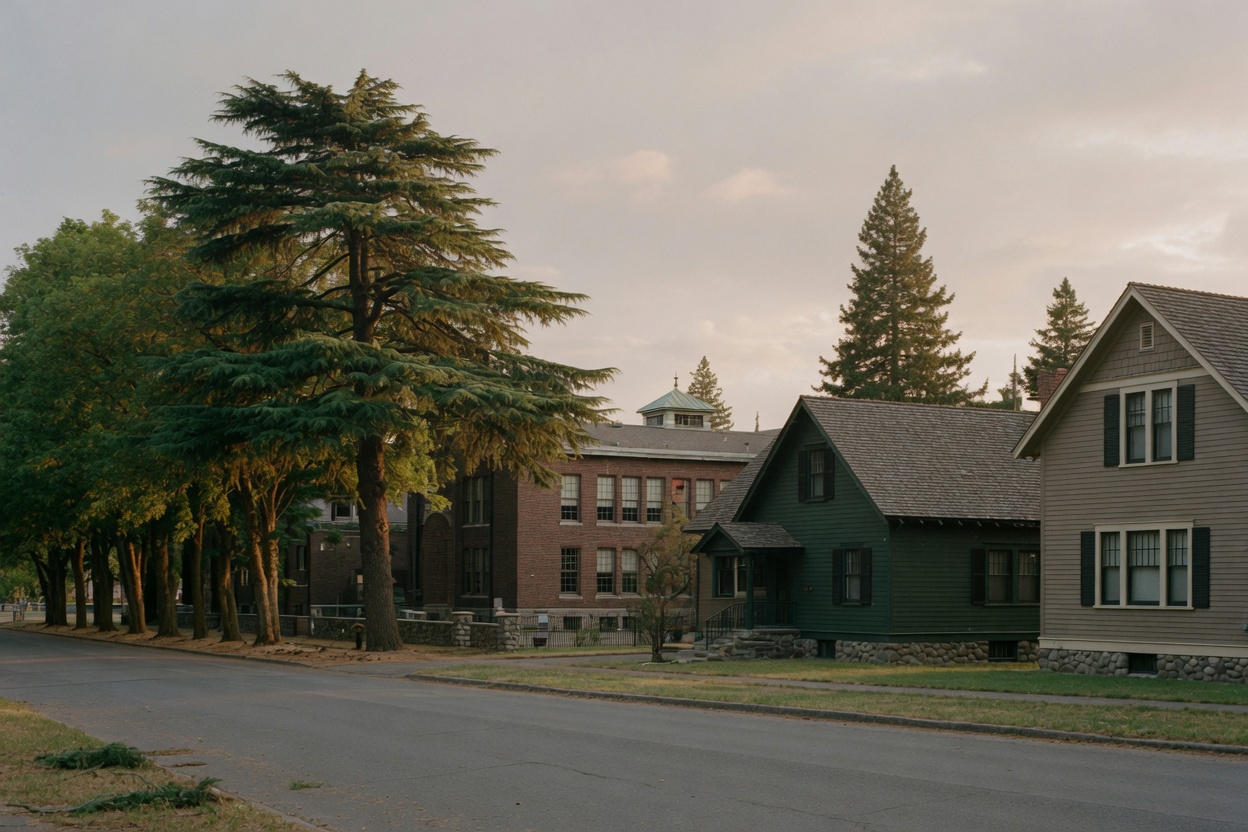
Audubon / Downriver is a pair of adjoining historic neighborhoods in northwest Spokane, Washington, sitting between the Spokane River and Northwest Boulevard. They are known for their early-1900s craftsman and bungalow housing stock, the green spine of Audubon Park and Downriver Golf, and a five-minute commute to downtown. Median home sales typically run $375K to $650K, with fully renovated craftsman homes and view lots above the river trading at $700K and up.
At a glance
- Schools: Spokane Public Schools — Audubon Elementary, Glover Middle, North Central High
- Median price band: $375K–$650K; renovated craftsman $700K+
- Construction era: predominantly 1900s–1940s craftsman and bungalow
- Lot size: small city lots (50’ x 100’ typical) with detached garages
- Commute: ~5 minutes to downtown Spokane
- Recreation: Audubon Park, Downriver Park, Downriver Golf, Riverside State Park access
What makes it different
This is some of the most intact pre-war housing stock in Spokane. Streets are tree-lined, lots are tight by Spokane standards, and a meaningful share of homes still have original built-ins, leaded glass, and box-beam ceilings. Audubon Park itself anchors the neighborhood — a full city park with a pool, playfields, and mature elms — and the western edge drops to Downriver Golf and the Spokane River gorge.
Walkability is the other distinguishing factor. The neighborhood connects on foot to the Garland District restaurants and theater to the east, and to the Northwest Boulevard corridor for daily shopping. Few Spokane neighborhoods this close to downtown still deliver detached single-family inventory in this price band.
Who lives here
A mix of long-tenure owners who bought in the 1980s and 1990s, younger professional couples renovating craftsman homes, and a growing share of buyers priced out of Browne’s Addition and the lower South Hill who want walkable character at a friendlier number. Whitworth and Gonzaga faculty are represented; remote workers who want a downtown-adjacent address without downtown prices are the fastest-growing segment.
The catch
Housing quality is mixed. Two homes on the same block can read very differently — one fully restored with updated systems, the next on its original knob-and-tube and 60-amp service. Gentrification is real and ongoing, which means some streets are clearly in transition. Parking is tight; many homes were built before two-car households existed, and on-street parking fills up. Lots are small enough that adding square footage usually means going up, not out.
How it compares
Audubon / Downriver vs Garland District: Audubon delivers more park frontage and the river edge; Garland delivers the denser walkable commercial spine. Audubon / Downriver vs Browne’s Addition: similar era of build, lower price band, less institutional weight, more single-family inventory. Buyers choose Audubon / Downriver when craftsman character and a five-minute downtown commute matter more than newer systems.