

Browne's Addition
Spokane's oldest neighborhood, immediately west of downtown — late-1800s mansions, the MAC museum, and a walkable historic district that trades from $350K condos to $1.5M+ restored estates.
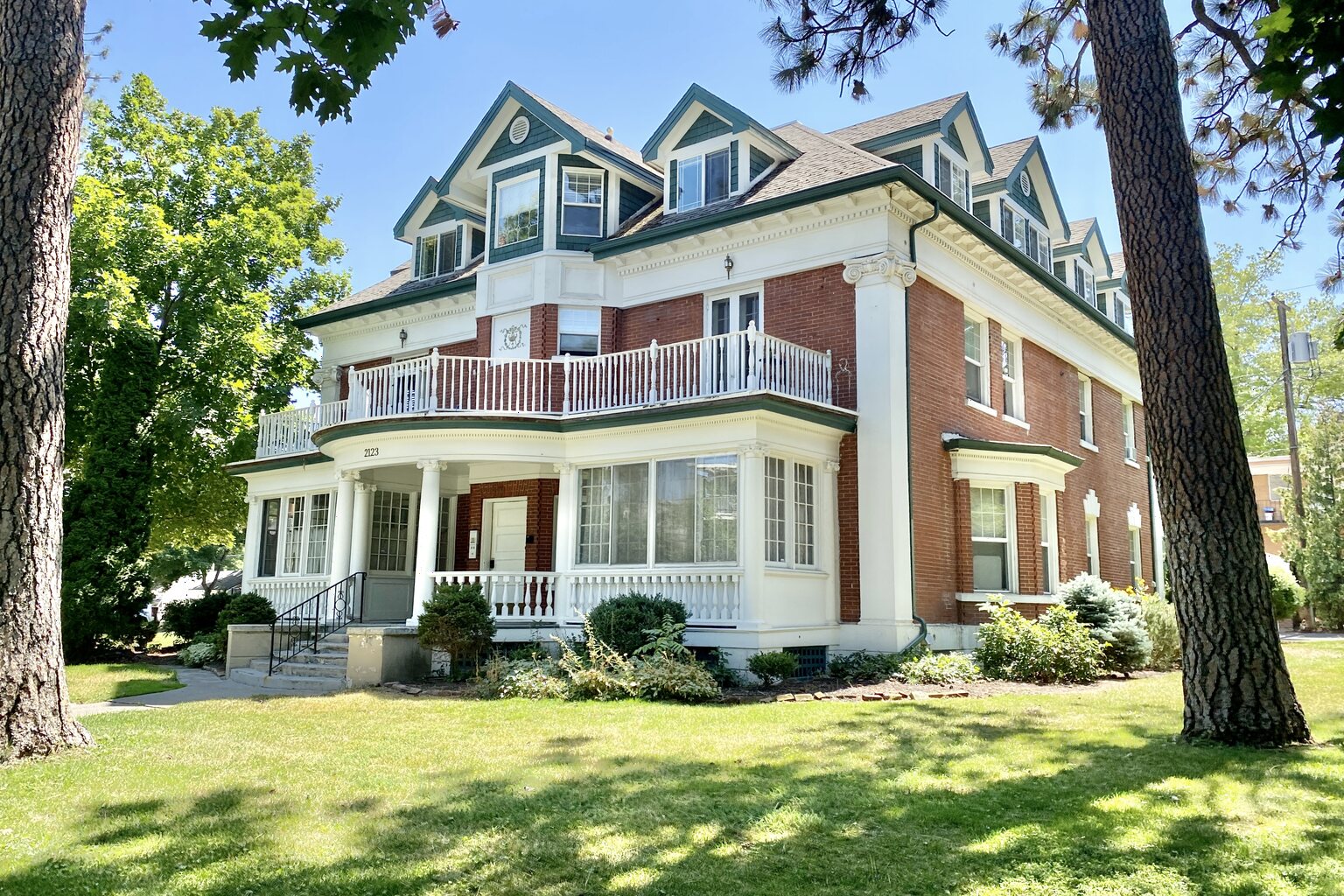
Browne’s Addition is Spokane’s oldest platted neighborhood, sitting immediately west of downtown on a bluff above Latah Creek. It is known for its concentration of late-1800s and early-1900s mansions, the Northwest Museum of Arts and Culture (MAC), and Coeur d’Alene Park — Spokane’s first city park, dedicated in 1891. Median home sales are highly variable here: condos and small bungalows trade from $350K, while fully restored mansions on the historic register clear $1.5M and up.
At a glance
- Schools: Spokane Public Schools — Roosevelt Elementary, Sacajawea Middle, Lewis & Clark High
- Median price band: $350K condos to $1.5M+ restored historic estates
- Construction era: late 1800s through 1910s single-family; 1960s–1970s apartment infill
- Lot size: city lots; mansion parcels meaningfully larger
- Commute: walkable to downtown Spokane (under 10 minutes on foot)
- Recreation: Coeur d’Alene Park, Coolidge Park, MAC museum, Centennial Trail access
What makes it different
Browne’s Addition is a designated historic district, and the housing stock reflects it. The mansion belt along W. 1st and Pacific Avenues was built by Spokane’s silver-and-railroad money in the 1880s and 1890s — turreted Queen Annes, brick Romanesques, and the occasional Greek Revival — and a meaningful share have been restored as single-family homes. The MAC museum, a major regional cultural anchor, sits inside the neighborhood and pulls weekend foot traffic.
The other defining feature is mixed housing typology on the same block. A restored 1895 mansion can sit directly next to a 1965 brick apartment building, which sits next to a 1910 four-square. That mix is part of the character; it is also why pricing varies so widely.
Who lives here
A blend of long-tenure historic-home owners, downtown-adjacent professionals in the condos and apartments, MAC and cultural-sector workers, and a meaningful renter share in the mid-century apartment buildings. Younger buyers tend to enter through the condo market; mansion buyers tend to be second- or third-home Spokane natives who specifically want a restoration project.
The catch
Condo quality varies wildly. Two units in two buildings a block apart can have very different HOA health, reserve studies, and structural conditions — read the resale certificate carefully. Rental density is high on some streets, which influences the feel block-to-block. Historic mansion ownership is its own commitment: knob-and-tube remediation, slate roofs, plaster repair, and the historic-district review process for exterior changes all add cost and time. Parking is tight throughout; many original homes have no off-street parking at all.
How it compares
Browne’s Addition vs South Hill: South Hill delivers larger lots, a quieter residential feel, and stronger consistency block-to-block; Browne’s Addition delivers the historic-district character and walkability to downtown that South Hill does not. Browne’s Addition vs Audubon / Downriver: similar era of housing, denser fabric, more institutional anchors. Buyers choose Browne’s Addition when historic-district character and a walkable downtown commute outweigh the variability of the housing mix.